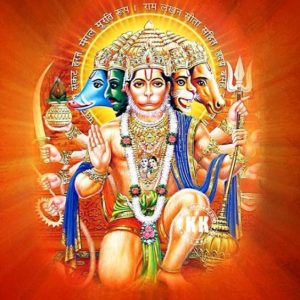
Sunderkand is a significant chapter from the Indian epic, Ramayana. It is written by the sage Valmiki and is one of the seven Kandas (sections) of the Ramayana. Sunderkand narrates the journey of Lord Hanuman to Lanka in search of Sita, the wife of Lord Rama, who was abducted by the demon king Ravana.
The name “Sunderkand” is derived from two Hindi words: “Sunder,” meaning beautiful or excellent, and “Kand,” meaning chapter. This section is revered for its spiritual significance and is often recited or read by devotees of Lord Rama to seek his blessings, strength, and protection.
The story of Sunderkand unfolds as follows:
When Rama’s wife Sita is abducted by Ravana and taken to Lanka, Lord Rama, accompanied by his brother Lakshmana and the Vanara (monkey) army, sets out to rescue her.
However, while crossing the ocean, the army faces a significant obstacle. Lord Hanuman decides to leap over the ocean to reach Lanka and search for Sita.
Upon reaching Lanka, Hanuman finds Sita in Ashoka Vatika, a garden where she is being held captive by Ravana.
Hanuman introduces himself to Sita, offers solace, and informs her of Rama’s plan to rescue her.
He then destroys parts of Ashoka Vatika to demonstrate his power to Ravana’s forces.
Before leaving, Hanuman hands over Rama’s ring to Sita as a token of his visit and devotion.
After successfully accomplishing his mission, Hanuman returns to Lord Rama and shares the news of Sita’s location.
The Sunderkand is not only an essential part of the Ramayana but also holds immense significance in Hindu culture. It is believed that reciting or listening to the Sunderkand can bring blessings, courage, and positivity into one’s life. Many devotees organize Sunderkand Path, where groups gather to collectively read or chant the chapter, usually as part of religious gatherings or ceremonies.